POSTمسار مهنيCareer
تعلم برمجة المواقع من الصفر: الخريطة اللي تمشي عليهاLearn web development from zero: the roadmap to follow
إيه اللي تتعلمه وبأنهي ترتيب، وإيه اللي تأجله، وإمتى تقول إنك جاهز للشغل.What to learn and in what order, what to postpone, and when you can call yourself ready for work.
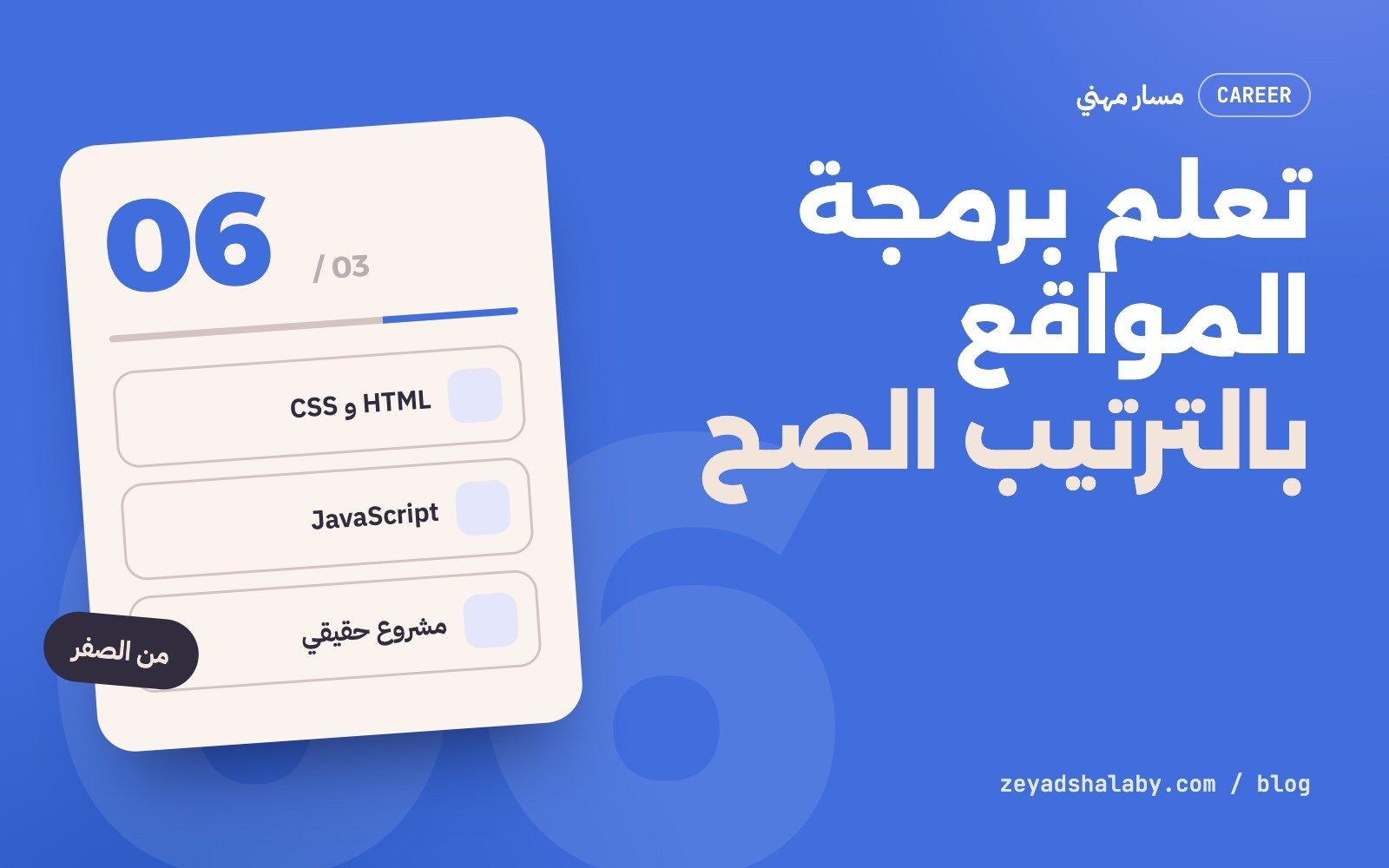
عشان تتعلم برمجة المواقع من الصفر امشي بالترتيب ده: HTML و CSS، بعدهم JavaScript، بعدين Git، بعدين إطار عمل واحد، وفي الآخر أساسيات الباك إند وقواعد البيانات. وكل مرحلة تقفلها بمشروع بتبنيه بإيدك. الترتيب أهم من المصدر، والمشروع أهم من الشهادة.
قبل ما تبدأ: حدد انت رايح فين
برمجة المواقع فيها تلات اتجاهات:
- Front end: اللي الزائر بيشوفه ويتعامل معاه.
- Back end: السيرفر، قاعدة البيانات، المنطق اللي ورا.
- Full stack: الاتنين مع بعض.
مش لازم تقرر دلوقتي. أول تلات مراحل واحدة للكل، وبعدها هتكون جربت كفاية تعرف انت بتميل لإيه.
المرحلة 1: HTML و CSS
HTML هو هيكل الصفحة و CSS هو شكلها. ركز على:
- العناصر الدلالية:
header،nav،main،article،button. مش كل حاجةdiv. - الفورمات والروابط والصور بنص بديل.
- Flexbox و Grid للتخطيط.
- التصميم المتجاوب: الصفحة تشتغل على الموبايل قبل الشاشة الكبيرة.
- الاتجاه العربي RTL والخصائص المنطقية زي
margin-inline-startبدلmargin-left.
المشروع: صفحة شخصية ليك، بصورتك ونبذة وروابطك، شغالة على الموبايل. من غير أي مكتبة.
المرحلة 2: JavaScript
دي أهم مرحلة وأطولها، وأكتر واحدة الناس بتستعجل فيها. محتاج:
- المتغيرات، الشروط، الحلقات، الدوال.
- المصفوفات والكائنات ودوالها:
map،filter،find. - الـ DOM: تختار عنصر، تغيره، تسمع لحدث.
fetchوasync/await: تجيب بيانات من API وتعرضها.- تقرا رسالة الخطأ في الـ console وتفهمها.
المشروع: تطبيق صغير بيجيب بيانات حقيقية من API مفتوح، زي الطقس أو أسعار العملات، وفيه بحث وفلترة وحالة تحميل وحالة خطأ.
المرحلة 3: Git وأدوات الشغل
- Git:
commit،branch،merge، وترفع على GitHub. - سطر الأوامر: تتنقل بين المجلدات وتشغل أمر.
- أدوات المطور في المتصفح: العناصر، الشبكة، الـ console.
- ترفع موقع على استضافة مجانية وتبعت الرابط لحد.
أسبوع أو اتنين بالكتير. ومن دلوقتي كل مشروع ليك يبقى على GitHub.
المرحلة 4: إطار عمل واحد
بعد ما JavaScript تبقى مريحة معاك، اختار إطار عمل واحد وكمل فيه. React هو الأكتر طلبا في سوق الشغل، ومعاه Next.js. Vue اختيار محترم وأسهل في البداية. ومعاه TypeScript لأنه بقى المعتاد في أي فريق.
اللي يهم مش أنهي واحد، اللي يهم إنك ما تتنقلش. المفاهيم واحدة: مكونات، حالة، بيانات داخلة وطالعة. اللي يتقن واحد بيتعلم التاني في أيام.
المشروع: تطبيق بأكتر من صفحة، فيه قايمة وصفحة تفاصيل وفورم، والبيانات جاية من API.
المرحلة 5: أساسيات الباك إند
حتى لو هتفضل Front end، لازم تفهم الناحية التانية:
- HTTP: الطلب والرد، الأكواد 200 و 404 و 500، الـ methods.
- قاعدة بيانات و SQL أساسي:
SELECTوINSERTوJOIN. - تسجيل الدخول بيشتغل إزاي: الجلسات والتوكنز، وليه الباسورد بيتخزن مشفر.
- لغة سيرفر واحدة: Node.js لو عايز تكمل بـ JavaScript، أو PHP مع Laravel أو ووردبريس، وهما منتشرين جدا في شغل المواقع والفريلانس.
المشروع: نفس تطبيق المرحلة اللي فاتت، بس الـ API بتاعك انت، بمستخدمين وتسجيل دخول.
الذكاء الاصطناعي في المذاكرة
استخدمه كمدرس مش كحلال واجبات:
- اسأله يشرحلك كود مش فاهمه، أو رسالة خطأ.
- اطلب منه يراجع حلك ويقولك إيه اللي يتحسن.
- ما تخليهوش يكتب المشروع بدالك وانت لسه بتتعلم. اللي بيتعلم هو اللي بيغلط ويصلح.
تفاصيل أكتر عن الحد الفاصل ده في Vibe coding: إيه هو وإمتى تعتمد عليه.
أخطاء بتضيع شهور
- دوامة الكورسات. تخلص كورس وتبدأ التاني من غير ما تبني حاجة. الفرجة مش تعلم.
- القفز لإطار العمل بدري. React من غير JavaScript معناه إنك حافظ مش فاهم.
- تغيير اللغة كل شهر. كل ما تقرا مقال عن حاجة جديدة تسيب اللي في إيدك.
- مشاريع منقولة. المشروع اللي اتنقل من فيديو مش بيثبت حاجة. غير فيه، زود عليه، اكسره وصلحه.
- الشغل في السر. ارفع شغلك واكتب عنه. اللي بيوظف بيدور على دليل مش على كلام.
إمتى أبقى جاهز للشغل
مفيش مدة ثابتة، وأي حد يوعدك برقم بيخمن. اللي يتقاس هو الآتي:
- عندك 3 مشاريع مرفوعة وشغالة، واحد منهم على الأقل فكرتك انت.
- تقدر تبني صفحة من تصميم من غير ما تتفرج على شرح.
- لما تقابل خطأ، بتعرف تدور وتوصل للحل لوحدك.
- تقدر تشرح كل سطر في مشاريعك وليه اتكتب كده.
لو قلقان إن المجال نفسه هيختفي، اقرا هل الذكاء الاصطناعي هياخد شغل المبرمجين. ولو محتار في خطوة معينة ومحتاج رأي حد شغال في المجال، احجز جلسة استشارة أو ابعتلي.
To learn web development from zero, go in this order: HTML and CSS, then JavaScript, then Git, then one framework, and finally the basics of back end and databases. Close every stage with a project you build with your own hands. The order matters more than the source, and the project matters more than the certificate.
Before you start: decide where you are heading
Web development has three directions:
- Front end: what the visitor sees and uses.
- Back end: the server, the database, the logic behind.
- Full stack: both.
You do not have to decide now. The first three stages are the same for everyone, and by then you will have tried enough to know what you lean towards.
Stage 1: HTML and CSS
HTML is the page’s structure and CSS is its look. Focus on:
- Semantic elements:
header,nav,main,article,button. Not everything is adiv. - Forms, links, and images with alt text.
- Flexbox and Grid for layout.
- Responsive design: the page works on a phone before a large screen.
- Right-to-left layout and logical properties such as
margin-inline-startinstead ofmargin-left.
Project: a personal page with your photo, a short bio and your links, working on mobile. No libraries.
Stage 2: JavaScript
The most important and longest stage, and the one people rush most. You need:
- Variables, conditions, loops, functions.
- Arrays and objects and their methods:
map,filter,find. - The DOM: select an element, change it, listen for an event.
fetchandasync/await: get data from an API and show it.- Reading an error message in the console and understanding it.
Project: a small app that pulls real data from an open API, such as weather or exchange rates, with search, filtering, a loading state and an error state.
Stage 3: Git and the working tools
- Git:
commit,branch,merge, and pushing to GitHub. - The command line: move between folders and run a command.
- Browser developer tools: elements, network, console.
- Deploy a site to a free host and send someone the link.
A week or two at most. From now on every project of yours lives on GitHub.
Stage 4: one framework
Once JavaScript feels comfortable, pick one framework and stay with it. React is the most requested in the job market, together with Next.js. Vue is a solid choice and easier at the start. Add TypeScript, since it is now the norm on any team.
What matters is not which one, it is that you do not keep switching. The concepts are shared: components, state, data in and out. Whoever masters one learns another in days.
Project: a multi-page app with a list, a detail page and a form, with data coming from an API.
Stage 5: back end basics
Even if you stay on the front end, you must understand the other side:
- HTTP: request and response, codes 200, 404 and 500, the methods.
- A database and basic SQL:
SELECT,INSERT,JOIN. - How sign-in works: sessions and tokens, and why passwords are stored hashed.
- One server language: Node.js if you want to stay in JavaScript, or PHP with Laravel or WordPress, both very common in website and freelance work.
Project: the app from the previous stage, but with your own API, users and sign-in.
AI while studying
Use it as a teacher, not as a homework solver:
- Ask it to explain code you do not understand, or an error message.
- Ask it to review your solution and say what could be better.
- Do not let it write the project for you while you are still learning. The one who learns is the one who makes the mistake and fixes it.
More on that line in Vibe coding: what it is and when to trust it.
Mistakes that cost months
- The course loop. Finishing one course and starting another without building anything. Watching is not learning.
- Jumping to a framework early. React without JavaScript means memorising, not understanding.
- Changing language every month. Dropping what you have each time you read about something new.
- Copied projects. A project copied from a video proves nothing. Change it, extend it, break it and fix it.
- Working in secret. Publish your work and write about it. Whoever hires is looking for evidence, not claims.
When am I ready for work
There is no fixed duration, and anyone promising a number is guessing. What can be measured is this:
- You have 3 projects deployed and working, at least one of them your own idea.
- You can build a page from a design without watching a tutorial.
- When you hit an error, you can search and reach the fix on your own.
- You can explain every line in your projects and why it is there.
If you worry the field itself will vanish, read will AI take programmers’ jobs. And if you are stuck on a specific step and want the view of someone working in the field, book a consultation or write to me.
سيب تعليقLeave a comment